
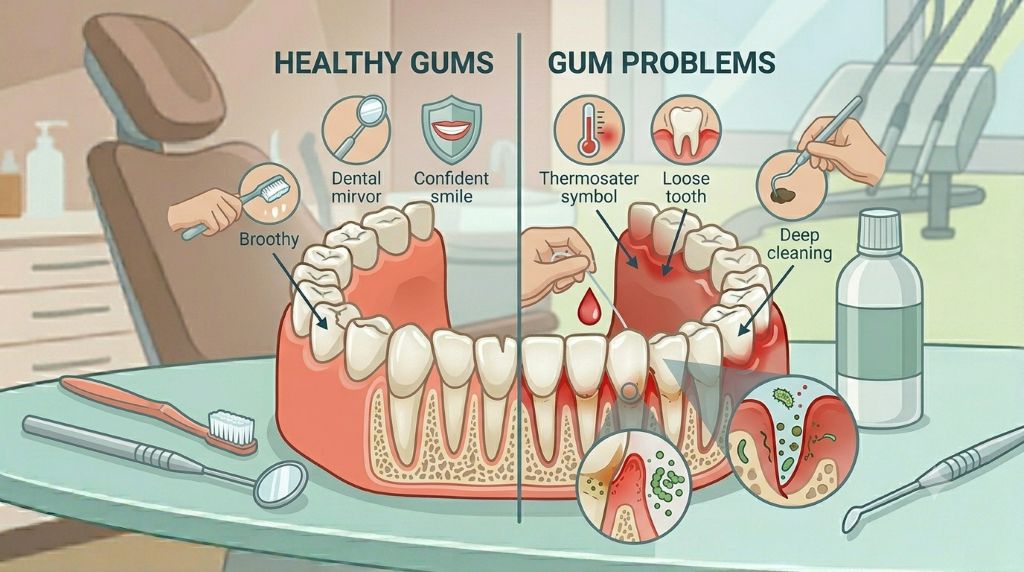
Healthy gums are essential for maintaining a strong, attractive smile and long-term oral health. However, many people overlook the early warning signs of gum problems, allowing minor issues to develop into more serious conditions. Recognizing common gum disease symptoms early can help prevent complications and support the health of your teeth and surrounding tissues.
At Novelly Family Dentistry, we encourage patients to pay attention to changes in their gum health. Symptoms such as bleeding, swelling, persistent bad breath, gum recession, and tooth sensitivity may indicate the need for professional gum disease treatment. Through routine dental cleaning services and personalized periodontal care in Chandler, we help patients address concerns early and maintain healthy gums for years to come.
Why Healthy Gums Matter
Your gums support and protect the structures that hold your teeth in place. When bacteria accumulate along the gumline, inflammation can begin, leading to conditions such as gingivitis and periodontal disease. Without proper periodontal care, these infections can progress and affect not only your oral health but also your overall well-being.
Routine visits for dental cleaning Chandler services help remove harmful plaque and tartar, reducing the risk of developing serious gum conditions. Early intervention is always the most effective approach when it comes to protecting your smile.
Bleeding Gums During Brushing or Flossing
One of the earliest and most common warning signs of gum problems is bleeding while brushing or flossing. Healthy gums should not bleed during routine oral hygiene practices.
Occasional bleeding may seem harmless, but persistent bleeding often indicates inflammation caused by plaque buildup. This can be an early stage of gum disease that may require professional gum disease treatment before it progresses into a more severe condition.
When bleeding becomes frequent, scheduling an appointment with a trusted dentist in Chandler can help identify the underlying cause and prevent further damage.
Persistent Bad Breath
Chronic bad breath that doesn’t improve with brushing, flossing, or mouthwash can be a sign of bacterial infection beneath the gumline. As bacteria multiply in periodontal pockets, they release toxins and odors that cause persistent halitosis.
Many patients mistake bad breath as simply a dietary issue, but it is often associated with developing periodontal disease. Seeking professional periodontal care in Chandler can help eliminate the source of infection and restore fresh breath.
Red, Swollen, or Tender Gums
Healthy gums should appear firm and pink. If your gums look red, swollen, or feel sensitive when touched, they may be responding to bacterial irritation.
Inflammation is the body’s natural response to infection, but prolonged swelling can damage gum tissue and the supporting bone structure around the teeth. Early gum disease treatment can reduce inflammation and prevent long-term complications.
Professional evaluations at a reputable dental office in Chandler can determine whether swelling is temporary or part of a larger periodontal concern.
Gum Recession
Gum recession occurs when gum tissue pulls away from the teeth, exposing more of the tooth surface or even the root. Receding gums can increase tooth sensitivity and make teeth appear longer than normal.
This condition is often associated with advancing periodontal disease, aggressive brushing habits, or untreated inflammation. Once gum tissue is lost, it does not naturally grow back, making early diagnosis essential.
Patients experiencing gum recession should seek comprehensive periodontal care to stop progression and preserve their oral health.
Loose or Shifting Teeth
Adult teeth should feel stable and secure. If you notice teeth becoming loose, shifting position, or changes in your bite alignment, your gums may be signaling significant periodontal damage.
Advanced gum disease affects the bone and connective tissues that support your teeth. Without immediate treatment, tooth loss can become a real possibility.
Prompt evaluation by a skilled dental professional or a periodontist near me can help patients access specialized treatment before permanent damage occurs.
Increased Tooth Sensitivity
Sensitivity to hot, cold, sweet, or acidic foods may indicate gum recession or exposed tooth roots. While sensitivity can have several causes, it is frequently linked to gum-related problems.
When gum tissue recedes, the protective covering around the tooth root becomes exposed, allowing external stimuli to reach sensitive nerve endings. Proper diagnosis and treatment of gingivitis can help address the underlying issue and reduce discomfort.
Pus Between Teeth and Gums
The presence of pus around the gums is a serious sign of infection and should never be ignored. Pus indicates that the body’s immune system is actively fighting bacteria within the gum tissues.
This symptom often signals advanced periodontal disease and requires immediate professional attention. Delaying treatment can increase the risk of bone loss and tooth loss.
Comprehensive gum disease treatment can eliminate infection and restore gum health before more severe complications develop.
Changes in the Way Your Teeth Fit Together
Many people are surprised to learn that changes in bite alignment can be linked to gum disease. As periodontal disease damages supporting structures, teeth may gradually shift out of position.
Patients who notice changes in how their teeth come together when biting should schedule a thorough examination. In some cases, collaboration between a family dentist in Chandler, AZ, and an orthodontist in Chandler may be necessary to restore proper alignment and function.
The Importance of Professional Periodontal Care
Preventive dental care remains the most effective defense against gum disease. Regular examinations and professional cleanings allow dental professionals to identify concerns before they become severe.
At Novelly Family Dentistry, we emphasize personalized periodontal care solutions designed to address each patient’s unique needs. Whether treating early gingivitis or managing advanced periodontal disease, professional care can help preserve your smile and protect your oral health.
Routine visits also support the longevity of treatments such as dental implants, crowns, and other restorative procedures by ensuring the surrounding gum tissue remains healthy.
How Gum Disease Is Treated
The appropriate treatment depends on the severity of the condition. Common treatment options include:
1. Professional Dental Cleaning
Regular dental cleaning Chandler appointments remove plaque and tartar buildup before inflammation develops into periodontal disease.
2. Scaling and Root Planing
This deep-cleaning procedure removes bacteria from below the gumline and smooths root surfaces to promote healing.
3. Gingivitis Treatment
Early-stage gum disease can often be reversed with professional cleaning, improved oral hygiene, and routine maintenance.
4. Advanced Periodontal Therapy
For more severe cases, specialized procedures may be recommended to restore gum health and prevent tooth loss.
Working with an experienced dentist in Chandler can help patients receive effective treatment tailored to their specific condition.
Preventing Gum Disease Before It Starts
Maintaining healthy gums requires consistent care and healthy habits. Preventive measures include:
- Brushing twice daily with fluoride toothpaste
- Flossing every day
- Attending regular dental examinations
- Scheduling routine professional cleanings
- Avoiding tobacco products
- Eating a balanced diet rich in vitamins and minerals
- Addressing gum concerns as soon as symptoms appear
These simple steps significantly reduce the risk of developing periodontal disease and support long-term oral health.
When to See a Dental Professional
Any persistent signs of gum irritation should be evaluated promptly. Bleeding, swelling, bad breath, gum recession, or loose teeth are all indications that professional attention may be needed.
Early diagnosis allows for more conservative treatment options and better long-term outcomes. Ignoring symptoms often allows disease progression that becomes increasingly difficult and expensive to manage.
Conclusion
Your gums constantly provide valuable clues about your oral health. Bleeding, swelling, bad breath, gum recession, sensitivity, and loose teeth are not normal conditions and should never be ignored. Seeking prompt gum disease treatment and maintaining regular periodontal care can help protect your smile, preserve your teeth, and improve your overall health.
At Novelly Family Dentistry, our team is committed to delivering exceptional preventive and restorative care. If you are experiencing any gum disease symptoms, schedule an appointment today and take the first step toward healthier gums and a stronger smile.
Frequently Asked Questions
1. Why do my gums bleed when I brush my teeth?
Bleeding gums are often an early sign of inflammation caused by plaque buildup along the gumline. If bleeding occurs regularly, professional evaluation and treatment can help prevent the condition from progressing into more serious periodontal disease.
2. Can gum disease go away on its own?
No. Gum disease typically does not resolve without proper dental care. Early-stage gingivitis may be reversed with professional cleaning and improved oral hygiene, while advanced periodontal disease requires specialized treatment to prevent further damage.
3. What are the first signs of gum disease?
Early gum disease symptoms commonly include bleeding gums, redness, swelling, tenderness, and persistent bad breath. Identifying these warning signs early allows patients to receive treatment before significant gum and bone damage occurs.
4. How often should I schedule a dental cleaning?
Most patients benefit from professional dental cleanings every six months. However, individuals with a history of gum disease may require more frequent visits to maintain healthy gums and prevent bacterial buildup.
5. Can receding gums grow back naturally?
Unfortunately, lost gum tissue does not usually regenerate on its own. Early intervention can stop further recession, and certain periodontal procedures may help restore gum coverage depending on the severity of the condition.
6. When should I see a periodontist for gum problems?
If you experience persistent bleeding, gum recession, loose teeth, swelling, or signs of infection, it may be time to consult a periodontist. Early treatment improves outcomes and helps preserve your natural teeth and supporting structures.


